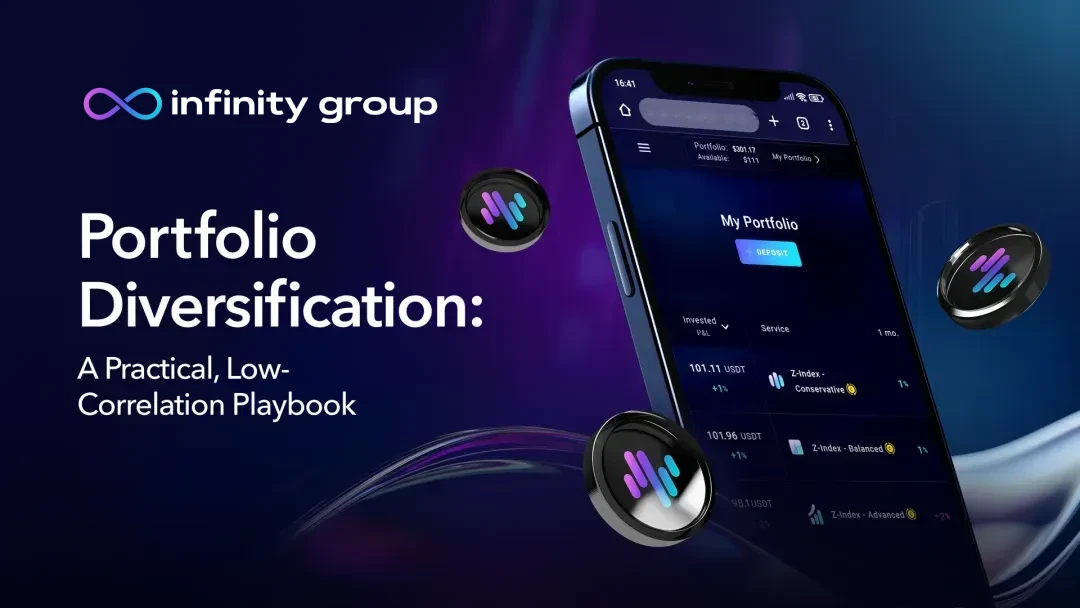
What is Portfolio Diversification?
People love to say "I'm diversified" because they hold a long list of positions. That's not the test. The real question is: do those positions behave differently when markets are under pressure? Early in my career, I learned the hard way that quantity can mask concentration. Five positions that dive together are one risk, not five protections.
I now use a simple "risk buckets" test. If I group my holdings by the main driver of returns, say U.S. growth equities, commodities, real estate, and short-term bonds, how much of my portfolio sits in each bucket?
If 80% sits in one bucket, I'm not diversified even if I own 40 tickers. In my own practice, I've seen how easily people confuse cousins for strangers: tech mega-caps, growth ETFs, and certain thematics can all lean on the same factor and fall in sync.
Key Takeaway: Portfolio Diversification is a design problem. We design a mix of assets and strategies that don't all respond to the same stress in the same way.
Diversification vs Asset Allocation vs Stock-Picking
-
Asset allocation is the top-level decision
about your mix of equities, bonds, cash, and possibly
alternatives.
-
Diversification is how varied you are within
and across those buckets (sectors, regions, styles).
- Stock-picking focuses on individual securities; unless it sits inside a diversified plan, it can create concentration risk.
The Role of Correlation: Why Five Cryptos ? Diversified
True diversification is about correlation, not quantity. A useful mental rule: assets that routinely move together (high positive correlation) won't rescue each other during stress.
I've watched investors hold five different cryptocurrencies and call it diversified. It's not; it's concentration inside one risk bucket.
If you've never looked at correlation before, think of it as a "tendency to move together," scaled from -1 to +1:
Correlation range: ?1 to +1. Near +1 means assets move together; near ?1 means they offset; near 0 means mixed/independent.
Why it changes: correlations are regime-dependent (inflation shocks, policy changes, crises). Analyze using rolling windows (e.g., 36 months) rather than one long-term average.
Illustrative Tendencies (not guarantees):
- Global equities ↔ quality bonds: often low/negative in stress, but not always.
- Equities ↔ commodities: can be low or positive; commodities may respond to inflation differently.
- Equities ↔ REITs: typically positive (both are risk assets) but with sector/income nuances.
I'm not chasing perfect negatives. I'm looking for low correlations across major components so that when one side struggles, another side can hold or even help.
Reading a Simple Correlation
These are directional, not promises. Use them as a compass, then verify with rolling windows. I'm not chasing perfect negatives. I'm looking for low correlations across major components so that when one side struggles, another side can hold or even help.
Core Building Blocks of a Diversified Portfolio
I build from the center out:
-
Core: broad equities (home + international),
high-quality bonds, and cash/short-term instruments for
resilience.
-
Satellites: REITs for real estate exposure,
selected commodities for inflation sensitivity, and small
sleeves of alternatives if they truly add a different
engine.
-
Within each block: I favor broad, low-cost
vehicles to reduce overlap and cost drag.
When adding a satellite, ask: does this genuinely diversify my core, or is it a shinier version of what I already hold?
Asset Allocation by Goal and Risk (Sample Mixes and How to Choose)
No single mix fits everyone. I start from goals and stress tolerance, then back into an allocation. Examples for illustration only (not advice):
Calibrate the bond/cash sleeve to the behavior you can sustain, not the return you wish you had.
Diversifying Within Assets (Caps, Styles, Regions)
Even inside equities, avoid "look-alike" bets:
- Market cap: mix large with mid/small to vary drivers.
- Styles/factors: blend growth and value; consider quality and size tilts.
- Geography: holds both developed and emerging markets.
- Sector breadth: check that you're not accidentally 40% in tech via overlapping funds.
Inside bonds, prioritize quality and duration mix first; only then consider measured credit risk or inflation-linked bonds to broaden responses across regimes.
Smart Ways to Add Alternatives (Real Estate, Commodities)
Alternatives can help, but treat them like seasoning:
- REITs: equity-like with income and inflation sensitivity. Expect equity beta.
- Broad commodities: potential inflation hedge; volatile and cyclical; understand roll/yield effects with futures-based products.
- Others: only if the strategy's return engine is genuinely distinct and fees are justified.
Rule of thumb: if you can't explain the risk engine in two sentences, don't rely on it to diversify you.
Implementation: Vehicles & Practical Choices
For most investors, stitching a low-correlation mix across markets is complex. Technology should bridge that gap.
- Index mutual funds / ETFs: broad total-market equity, global ex-home, and quality broad bond funds as core building blocks.
- Automation: set up automatic contributions; let flows nudge you toward targets.
- Managed options (optional): multi-asset index or professionally constructed portfolios for "single-ticket" simplicity (assess costs, tracking error, tax treatment, liquidity).
- Cash/short-term instruments: T-bills, money market funds, or short-duration bond funds, depending on jurisdiction.
Disclosure: brand or product mentions are examples only, not endorsements. Evaluate costs, tracking differences, and structure before allocating.
i-Indexes: Managed Diversified Portfolios
Where professional construction helps, especially for multi-strategy or tokenized/real-world-asset sleeves, managed portfolios can add value through design and maintenance.
At Infiniti Group Ltd, we built i-Indexes to provide access to diversified, professionally constructed portfolios without asking investors to micromanage each piece.
What i-Indexes are: Professionally managed, multi-sleeve index portfolios offered by Infiniti Group Ltd that auto-rebalance within rules. i-Indexes may include diversified profit-sharing services (e.g., market-neutral, trading strategies, or tokenized real-world exposures).
Treat a i-Index as a satellite sleeve inside your total portfolio.
Why it can complement this playbook:
- One-ticket exposure that reduces operational overhead.
- Rule-based rebalancing and risk bands inside the sleeve; you still manage total-portfolio drift bands.
- Performance-aligned fee model (high-water-mark style) on all i-Indexes. Always review the specific terms.