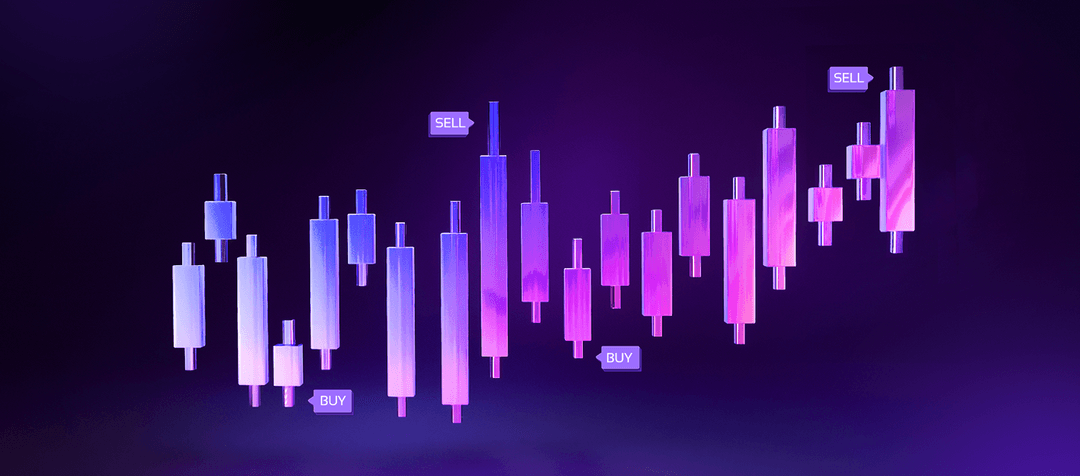

Crypto Trading Indicators: A Smarter Market Analysis

In this dynamic world of digital assets Crypto trading indicators are the essential tools that empower traders to make sense of complex market data, transforming chaotic price charts into actionable insights.

In short, they are your analytical toolkit, helping you move beyond gut feelings and make decisions based on data. These indicators are mathematical calculations based on an asset's price, trading volume, or open interest, which are then plotted as lines or patterns on a chart.

Mastering these indicating tools is important for both beginners and expert traders. They help them in identifying trends, gauging market momentum, and making more informed and strategic trading decisions in the fast-paced crypto market.

Understanding Crypto Trading Indicators as Forecasting Tools

Crypto trading indicators are technical tools used by traders to forecast future price movements in the cryptocurrency market. By analyzing historical data, they help gauge potential shifts and crypto market sentiments. A lasting edge comes from combining three powerful analytical pillars:

  • Technical Analysis (TA): This is a classic art of studying and analysing historical price charts and trading volumes to predict future trends.
  • On-Chain Analysis: This is a new venture to look into blockchain data to see how money is moving and what different investors are doing.
  • Sentiment Analysis: This is a science of measuring the collective mood of market, its fear and greed index that most often drive the price swings.

Take an example to understand, Moving Averages (MAs) are fundamental indicators that simplify the pricing data to show in which direction this trend is moving. A trader might see a "golden cross" when a 50-day Simple Moving Average (SMA) crosses above a 200-day SMA. This means that the market is going up. Adding these free crypto trading indicators to platforms like TradingView makes it easier to analyze how volatile an asset is.

How Future Price Movements are Forecasted in Crypto

Future price movements in cryptocurrency markets are forecasted using analytical tools known as crypto trading indicators. These indicators help traders identify patterns and potential entry or exit points by interpreting market data.

For instance, the Relative Strength Index (RSI) is a momentum oscillator that provides overbought/oversold signals, meaning if something is overbought or oversold. An RSI reading above 70 often means that an asset is overbought, which is a very important piece of information amidst high crypto market volatility.

According to a Forbes survey from 2023, 48% of crypto owners trade at least once a month, which shows how important it is to have quick and reliable indicators.

The Process of Forecasting with Crypto Trading Indicators

Forecasting future price movements in crypto is a process that relies on applying indicators for crypto trading to market data. This involves building a systematic approach, often by combining leading vs lagging indicators.

Combining a lagging indicator like Moving Averages with a leading one like the RSI on TradingView can form the basis of many successful indicator-based trading strategies.

What are the Main Types of Crypto Trading Indicators

Trading indicators are broadly categorized into four main types:

  1. Trend Indicators: These trend indicators, like Moving Averages (MA) and the Average Directional Index (ADX), help identify the market's direction.
  2. Momentum Indicators: These act like a speedometer for the market, telling you if price movements are accelerating or losing steam. The Relative Strength Index (RSI) is one of the momentum indicators that measures the speed of price changes.
  3. Volatility Indicators: These indicators, such as Bollinger Bands, show price fluctuations. When the bands tighten, it signals that a big, explosive price move is brewing.
  4. Volume Indicators: Volume confirms the strength of a price move. On-Balance Volume (OBV) is a volume indicator that tracks capital flow.

The Bottom Line: From Indicators to Intelligent Trading

Mastering crypto trading indicators is a crucial step toward developing a sophisticated and proactive trading strategy. These tools provide the data-driven clarity you need to navigate the markets effectively. By learning to read these different layers of the market, you can move from being a passive observer to an active, informed participant in the ever-evolving world of crypto with data-driven insights.

But that's only half the battle. The constant monitoring and split-second execution required can be demanding. Zignaly's Profit Sharing model is a better way to go if you want to use expert-led strategies but don't have time to do a lot of research.

Professional traders execute trades on your behalf, using their deep understanding of crypto indicators and trading strategies. This allows you to participate in the market confidently while leaving the complexity to seasoned experts.

Zignaly combines profit-sharing technology with pooled trading to ensure every investor achieves the same results as their trader. This innovation eliminates the inconsistencies of traditional copy trading to create a more equitable and transparent trading ecosystem
Zignaly's advanced Profit Sharing model
A smarter alternative to traditional copy trading

FAQs - Crypto Trading Indicators

Here are answers to some of the most common questions about crypto trading indicators
Which indicator is best for Crypto Day trading?
How do whale tracking indicators work in crypto?
Is the crypto market sentiment index reliable?

Start your Z-Indexes journey today — simple, structured investing in one place.

Crypto Copy Trading FAQs

While we've covered a lot, you may still have questions or concerns that need clarification. Let's address some common questions about crypto copy trading.
Is Crypto Copy Trading Profitable?
Can You Use a Bot to Trade Crypto?
Can I Make Money From Copy Trading?
Is Crypto Copy Trading Legal?
What Is the Best Strategy for Copy Trading?